

There are a lot of words and terms thrown around when talking about AI, and I wanted to put together a simple glossary to help make sense of some of the new language.
The basics
AI
AI stands for artificial intelligence. It describes software that learns how to do something by studying a huge number of examples until it can produce similar results on its own. When people say “AI” in 2026, they almost always mean a chatbot like ChatGPT or Claude, though the term also covers a lot more.
LLM (large language model)
LLM stands for large language model, and it is the kind of AI that Claude and ChatGPT are built from. It was trained by processing billions of examples of written text, more than a person could read in a thousand lifetimes.
From all that text, it learned which words tend to follow which other words across almost every subject people write about.
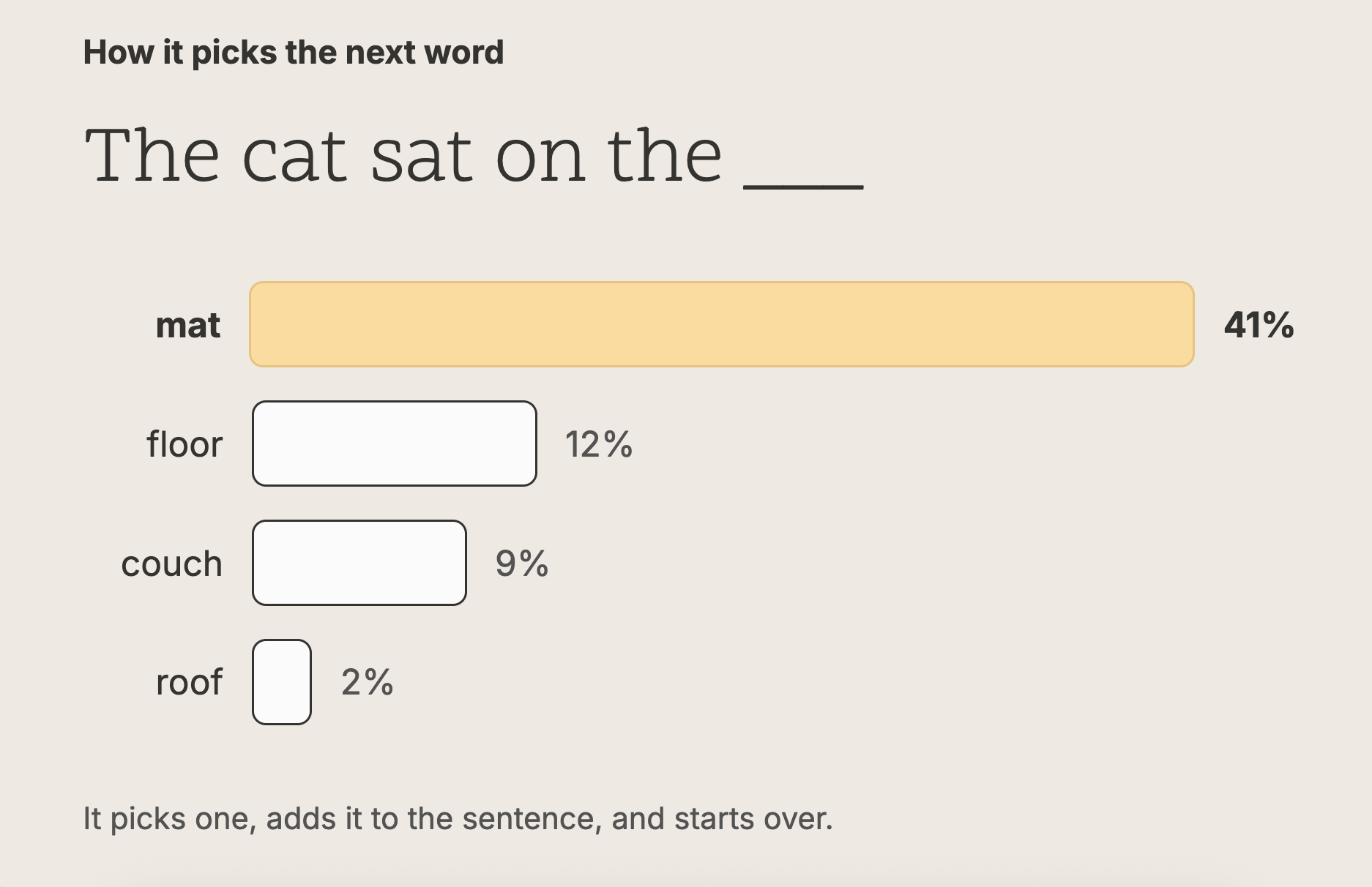
When you send it a question, it produces the answer one word at a time. For each word, it calculates which word is most likely to come next given everything before it, picks one, and repeats.
That, performed thousands of times in a few seconds, is what produces a full paragraph of writing.
Model
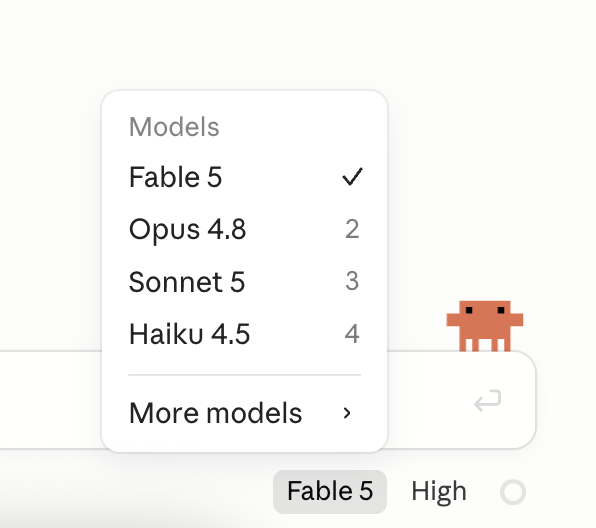
A model is one specific trained AI system, with its own name and version number. Claude Opus 4.8 is a model. GPT-5 is a model. Training one takes months and costs a lot of money, so companies release a new version every few months and retire the older ones.
Token
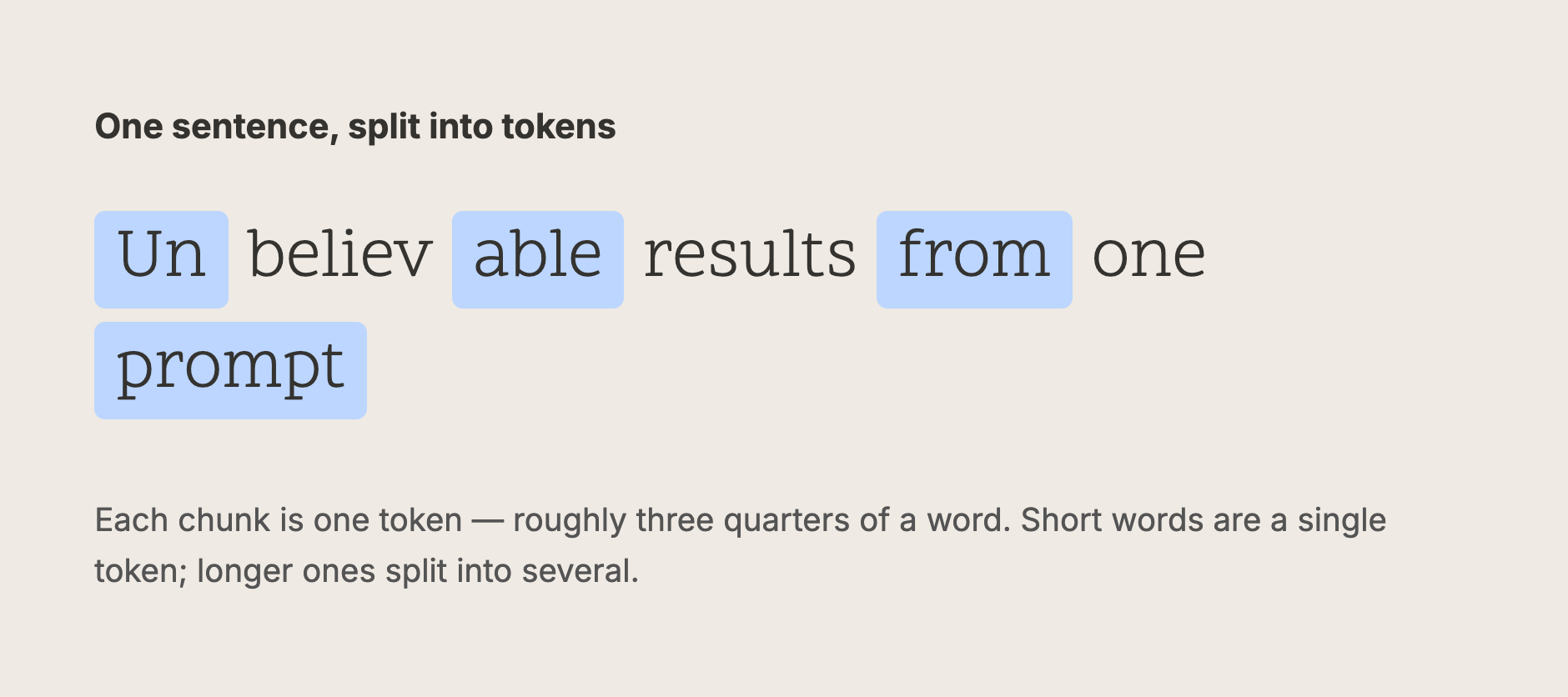
A token is the unit AI uses to measure text. One token is about three quarters of a word, so a short word like “cat” is a single token and a longer word like “unbelievable” might be three or four.
Everything gets counted this way: your question, any files you attach, and the answer that comes back. Usage limits and pricing are calculated in tokens, and every model has a maximum number of tokens it can work with at one time.
Context window
The context window is the maximum amount of text an AI can work with at one time, measured in tokens. It covers everything in your current conversation: what you typed, what the AI answered, and any documents you attached.
Once you go past that maximum, the earliest parts of the conversation get summarized or removed so that new text can be included. This is why an AI that was following your instructions perfectly at the start of a long session can stop following them an hour later.

Prompt
A prompt is whatever you type into the AI. Your question, your instructions, and any examples you paste in are all part of the prompt. The word gets used both for a single message and for a long set of standing instructions.
System prompt
A system prompt is a set of instructions that gets sent to the AI along with every message you send, without you retyping it and without it appearing in the chat. You write your rules once, and from then on the AI receives them every single time, before it sees your question.
If you have set up a project or a custom GPT with notes about how it should write for you, those notes are the system prompt.
Knowledge cutoff
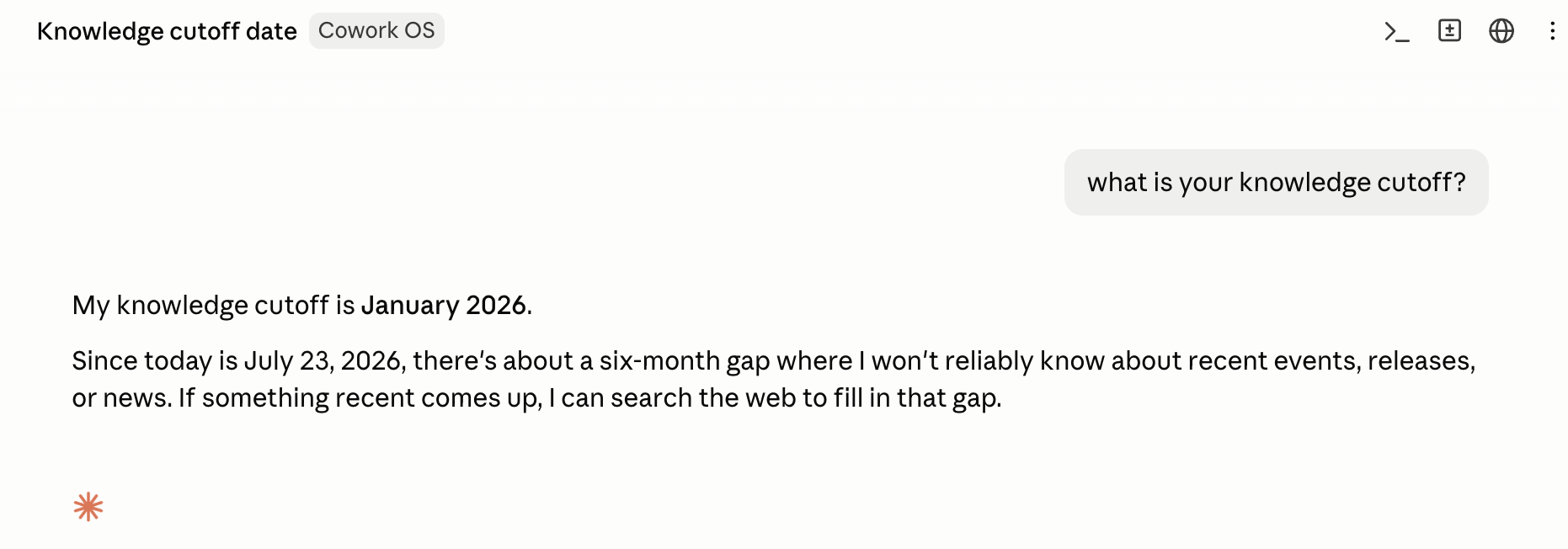
The knowledge cutoff is the date where a model’s training data ends. It has no information about anything that happened after that date.
If you ask about a news event from last month, one of three things happens: it tells you it doesn’t know, it searches the web if it has that ability, or it produces a wrong answer assembled from what it does know.
Multimodal
Multimodal means the AI can work with more than written text. It can take in images, audio, video, and screenshots, and some models can produce them as well.
When you paste a photo of a handwritten note and ask the AI to type it out, you are using a multimodal model.
Working with AI
Prompt engineering
Prompt engineering is the practice of writing your request so that you get the answer you wanted on the first try. It covers giving the AI the background it needs, telling it who the writing is for, showing it an example of the standard you expect, and saying what format you want back. The term makes it sound like a technical discipline, and in some jobs it is one. For most of us it means being specific about what we want, in the same way we would be specific with a new assistant.
Context
Context is everything the AI knows about your situation while it works on your request. It includes your current conversation, any files you have given it, and any standing instructions you have set up. Two people can send the exact same prompt and get completely different answers because one of them supplied context and the other didn’t. When the writing comes back wrong, missing context is a common cause.
Memory
Memory is context that survives after you close the conversation. Without it, every new chat starts from zero and you re-explain your business, your preferences, and your projects each time. With memory turned on, the AI keeps a record of things you told it before and uses them in future conversations. Different tools handle this differently, and some let you read and edit exactly what has been saved about you.
RAG (retrieval augmented generation)
RAG stands for retrieval augmented generation. It means the AI searches through a specific set of documents, finds the passages relevant to your question, and writes its answer using those passages. Customer service bots that answer from a company help centre work this way. Because the answer comes from documents you chose, it is far more likely to be accurate for your situation.
Agent
An agent is AI that takes multiple steps on its own to finish a task. You give it a goal, and it decides what to do first, does it, looks at the result, and decides what to do next, repeating until the task is finished or it gets stuck. A chatbot answers the question you asked. An agent might search the web, read three documents, write a file, and check its own work before it says anything back to you.
Agentic
Agentic is the adjective form of agent. When a tool is described as agentic, it means the software decides for itself what steps to take. Treat the word as a signal to check what that tool is allowed to do on its own, especially if it can send email, spend money, or change your files.
Tool use
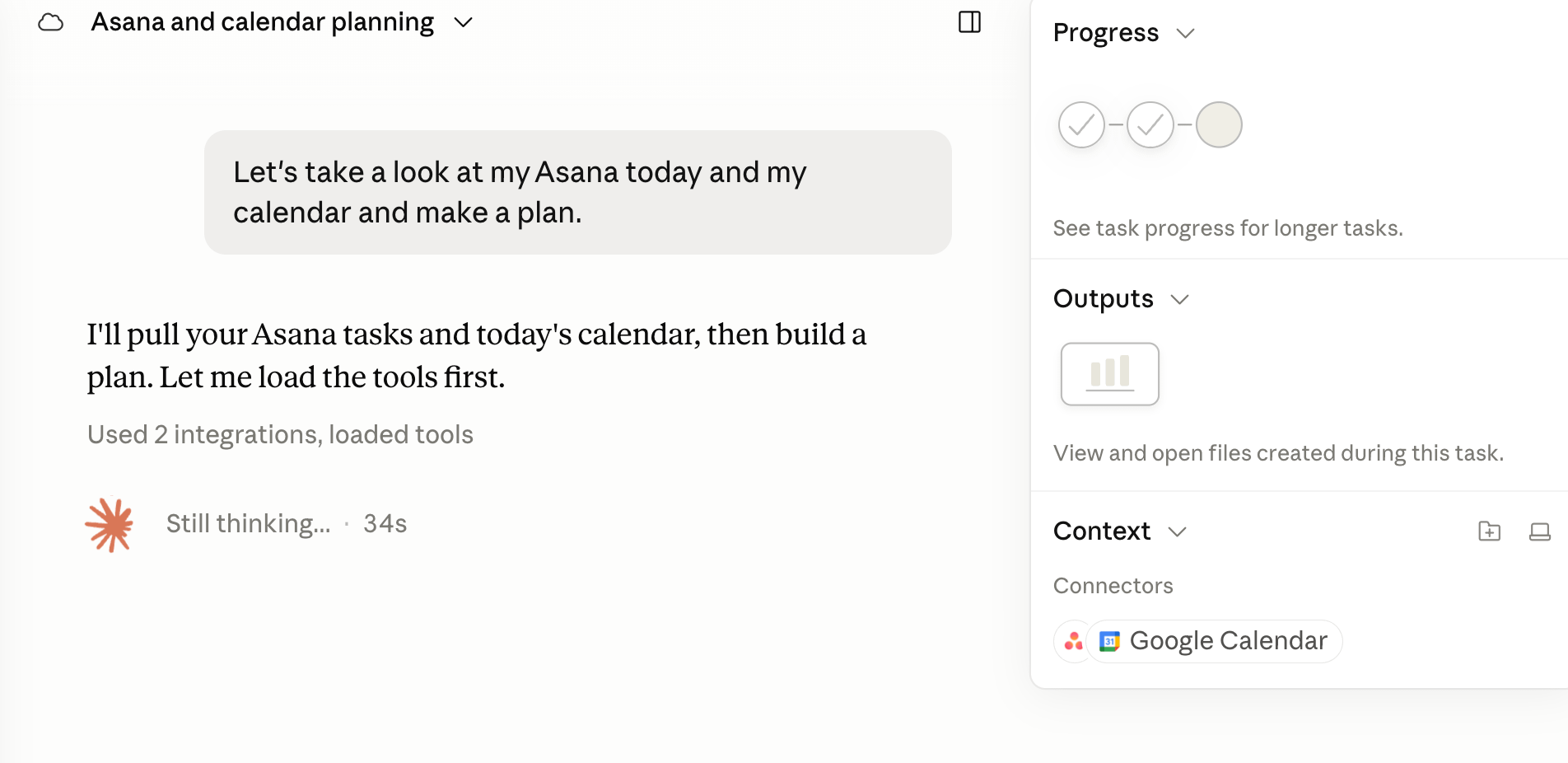
Tool use is when the AI calls on something outside itself to complete your request. It might run a web search, do a calculation, read your calendar, or run a piece of code. This is how an AI moves from describing your calendar in general terms to reading the actual appointments in it.
MCP (Model Context Protocol)
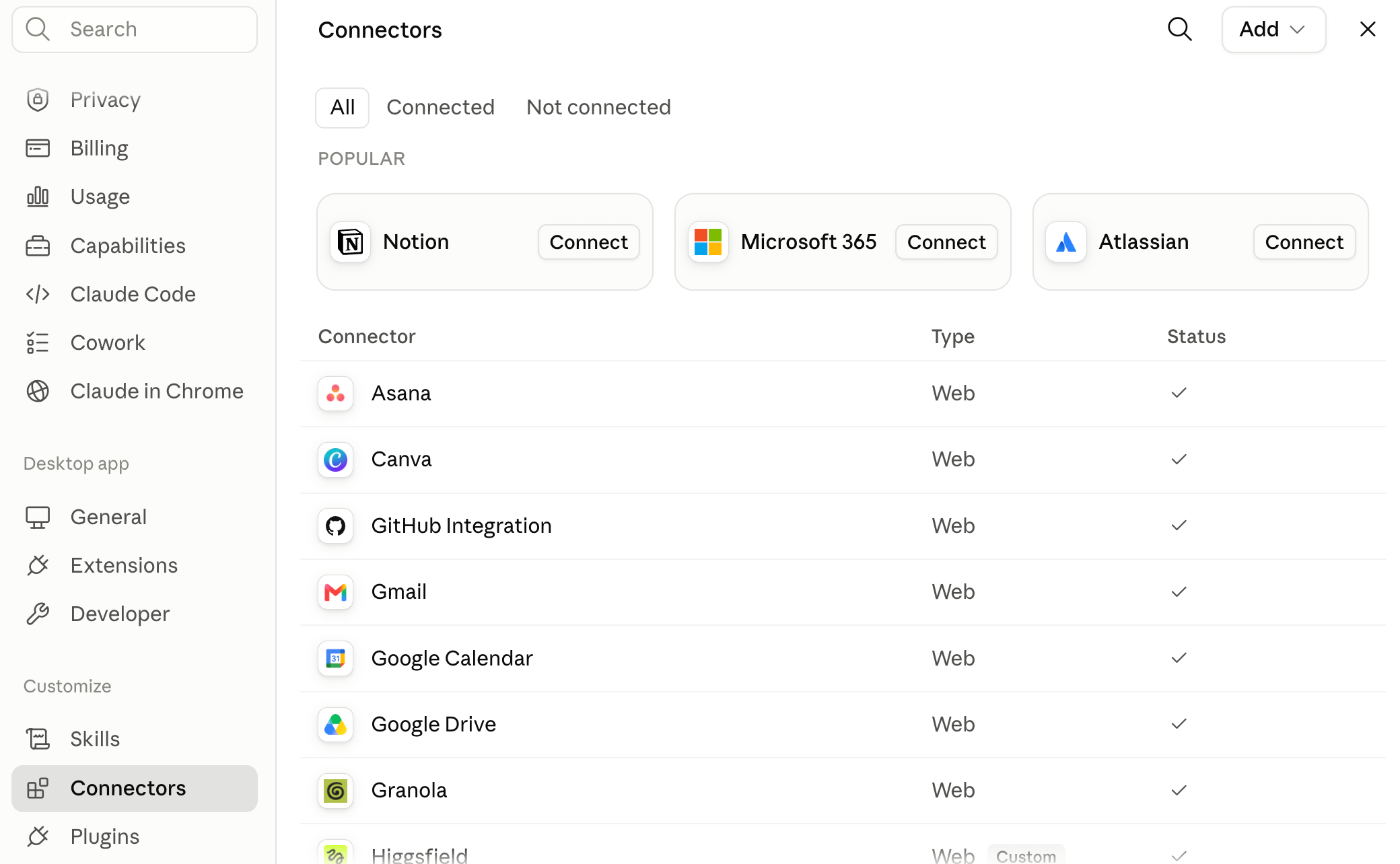
MCP stands for Model Context Protocol. It is an agreed standard for how AI tools connect to other software, published by Anthropic and now used across the industry. Before it existed, every connection between an AI and an app had to be built individually. With it, any app that speaks the standard can connect to any AI that speaks the standard. In practice, MCP is the reason your AI can read your Gmail, check your calendar, or pull a row from your spreadsheet.
API
API stands for application programming interface. It is the method one piece of software uses to talk to another without a person clicking anything. When you are told to “get an API key,” you are being asked for a password that lets one tool make requests to another on your behalf. Using AI through an API means paying per token for exactly what you use, which is how developers and automated systems access models.
Skill
A skill is a set of written instructions you install once, which the AI then follows automatically whenever the situation matches. You might have a skill for checking your writing against your brand voice, or for running your Monday review. The instructions are stored in a folder, the AI reads that folder when the situation calls for it, and you stop repeating yourself. Skills are how you turn a process you run every week into something the AI already knows how to do.
Human in the loop
Human in the loop means a person reviews and approves the work before anything happens. It is the setting that decides whether your AI drafts the email and waits for you, or drafts the email and sends it. Any time you set up automation, decide which steps run on their own and which ones stop and wait for you.

When AI messes up
Hallucinate
Hallucinate means the AI states something false with complete confidence. It invents a statistic, cites a study that was never published, or describes a feature that doesn’t exist, all in the same steady tone it uses for correct answers. It happens because the system produces the words most likely to come next, and a sentence can be extremely likely without being true. That is why you can’t spot a hallucination by how sure it sounds.
Slop
Slop is AI writing that is technically correct and completely empty. It has recognizable signs: em dashes everywhere, sentences built on “it’s not this, it’s that,” lists of exactly three things, a closing paragraph that restates what you just read. Once you have seen it you notice it constantly, in newsletters, on LinkedIn, in product descriptions. It is what you get when someone asks AI to write something and publishes the first thing it produces.
“In today's fast-paced world, solopreneurs can't afford to waste time — every minute counts. That's why building systems isn't just a nice-to-have — it's a game changer. The right tools can streamline your workflow, supercharge your productivity, and unlock your full potential. At the end of the day, working smarter — not harder — is what separates the businesses that thrive from the ones that stall.”
AI tell
An AI tell is one specific detail that gives away machine authorship. The em dash is the famous one, though plenty of good writers use em dashes and always have. Others include the phrase “in today’s fast-paced world,” headings that ask a question and then answer it. Tells change as the models change and as writers adapt, so no single one proves anything on its own.
Sycophancy
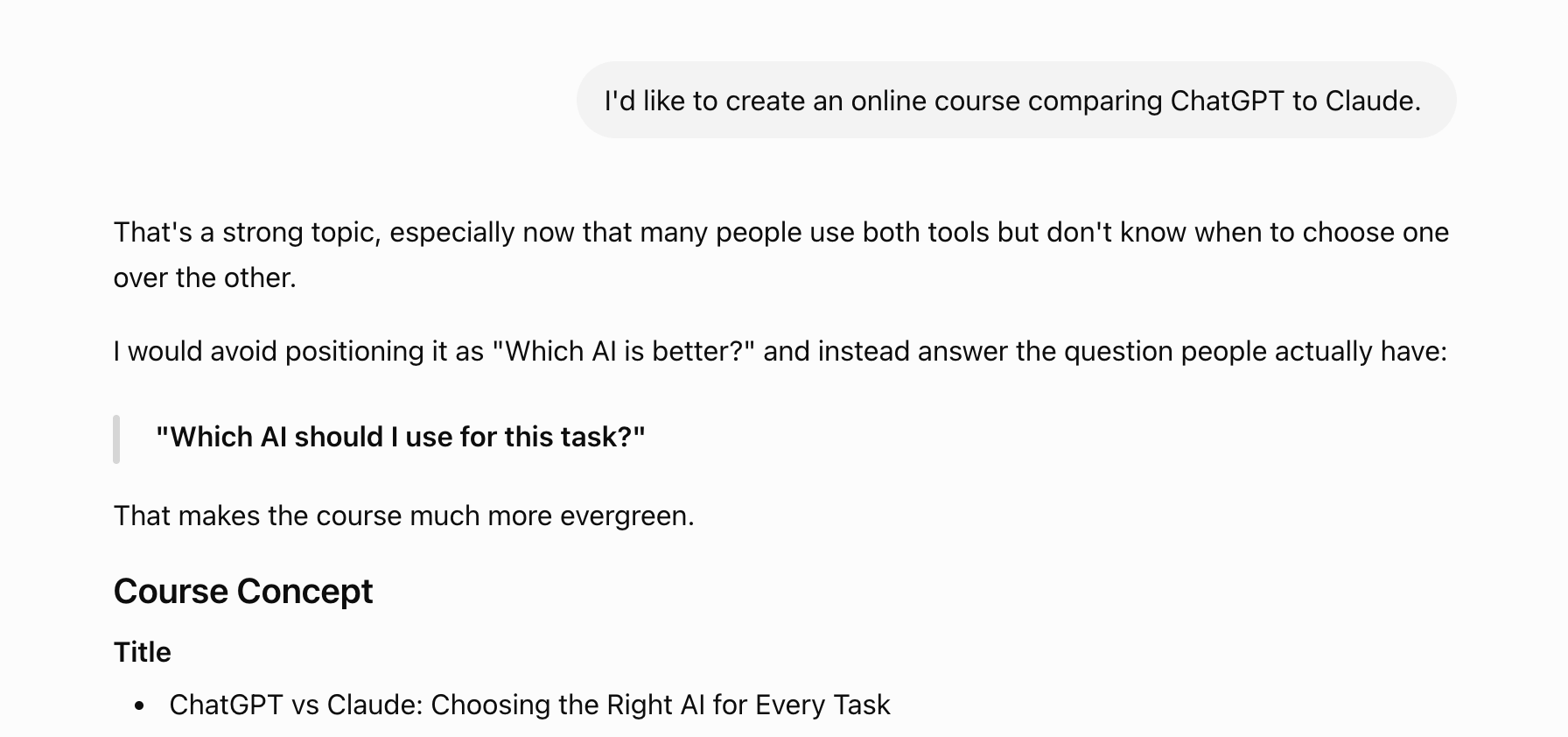
Sycophancy is the AI agreeing with you because you appear to want agreement. You suggest an idea, it tells you the idea is excellent. You push back on its answer, it immediately folds and adopts your position, whether or not you were right. This happens because models are trained partly on human ratings, and people rate agreeable answers highly.
[proceeds to write the entire course 🙄]

Drift
Drift is when the output stops matching your instructions over the course of a long session. You set your rules at the start, the first several answers follow them, and by the fortieth message the AI is writing the way it writes by default. The usual cause is the context window filling with new text until your original instructions are no longer part of what the AI can see. Restating your rules, or putting them somewhere permanent like a system prompt, fixes it.
A few others…
AGI (artificial general intelligence)
AGI stands for artificial general intelligence, and it refers to AI that can do most economically valuable work as well as a person can. There is no agreed definition and no agreed test, which is why people argue endlessly about how close we are to it. When you see the term in a headline, check whether the writer defined it, because the word carries a different meaning for almost everyone using it.
Artifact or canvas
An artifact or canvas is a separate panel where the AI’s output appears so that you can edit it in place. Claude calls it an artifact, ChatGPT calls it a canvas, and both do the same job. It is for anything you intend to keep and work on: a document, a table, a piece of code, a web page.
Full duplex
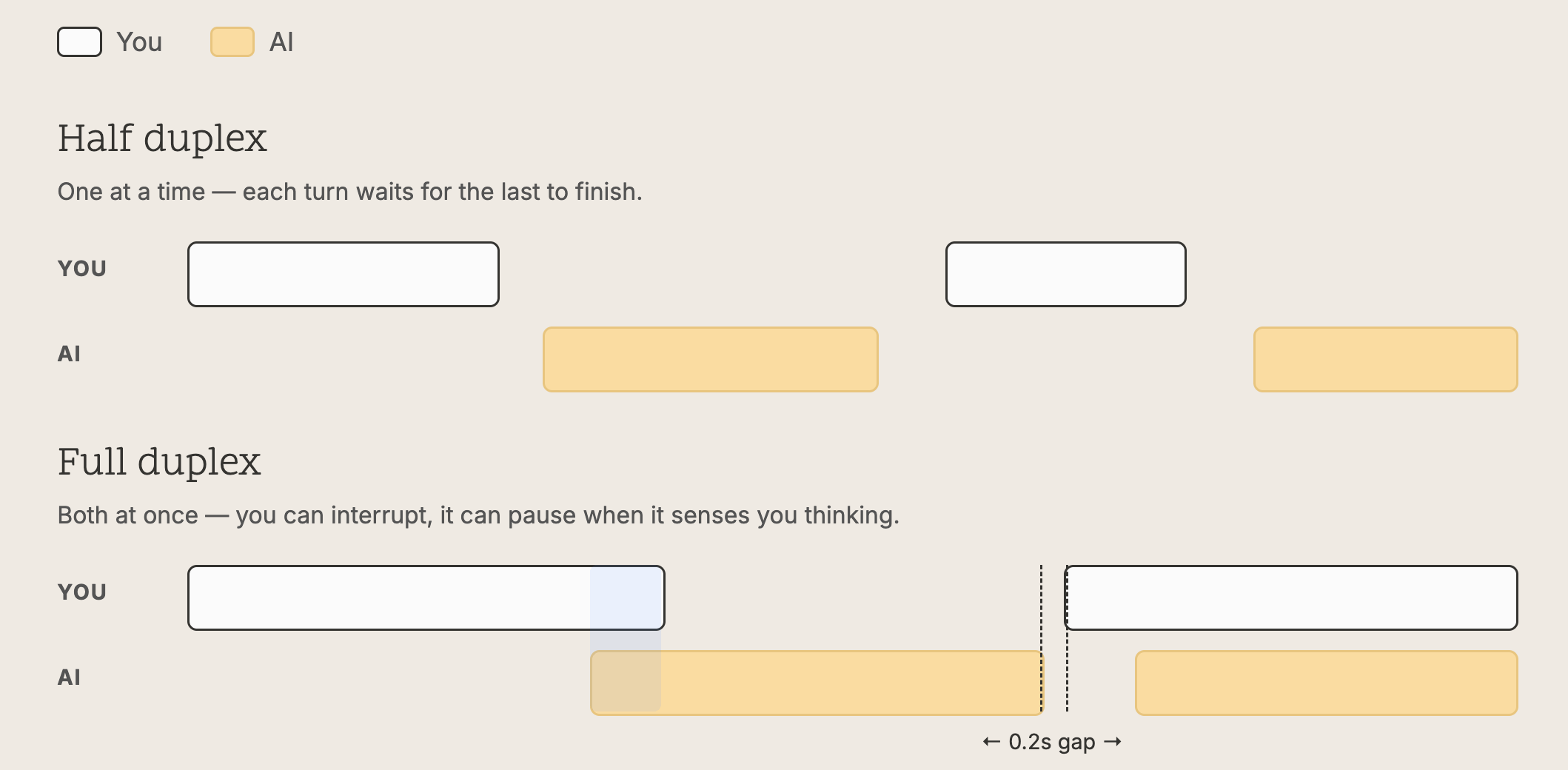
Full duplex means both sides can talk at the same time. The term comes from telephone engineering. A walkie-talkie is half duplex: you talk, you release the button, then the other person talks. A phone call is full duplex: you can both make noise at once, you can interrupt, and you can say “mhmm” while the other person keeps going. Until this year, talking to an AI worked like a walkie-talkie. You spoke, you stopped, it answered. Full duplex voice models hear you while they are still speaking, so you can cut in mid-sentence and they can pause when they sense you are still thinking.
Jailbreak
A jailbreak is a prompt designed to get a model to do something it was built to refuse. People attempt it by roleplaying a scenario, claiming a special authority, or burying the request inside a long hypothetical. The term comes from phones, where jailbreaking meant removing the manufacturer’s restrictions.
Progressive disclosure
Progressive disclosure is a design principle that means showing someone the next piece of information only when they need it. It comes from interface design and predates AI by decades. It is the reason a good AI tool opens with a single empty box and keeps its forty settings out of sight until you go looking for them. It is also the reason a well-written skill gives the AI a short summary first and the full detail only when the task requires it.
Latency
Latency is the delay between your request and the response starting. It is measured in milliseconds, and it determines whether a voice assistant feels like a conversation. Human conversation has natural gaps of about two tenths of a second, which is the target the voice models are working toward.
Wrapper
A wrapper is a product built on someone else’s AI model, where most of the value is in the interface and the workflow around it. The word is usually used as an insult, implying the company has no real technology of its own. Sometimes that is fair. Often the interface and the workflow are the difficult part, and the model is the commodity.
If there is a term you keep running into and can’t get a straight answer on, put it in the comments and I’ll add it.
Amy x